Friday, 21 February 2014

Final APR session held!

This is a very exciting landmark. We still have a lot of work to do... but the final APR workshop was held yesterday. 

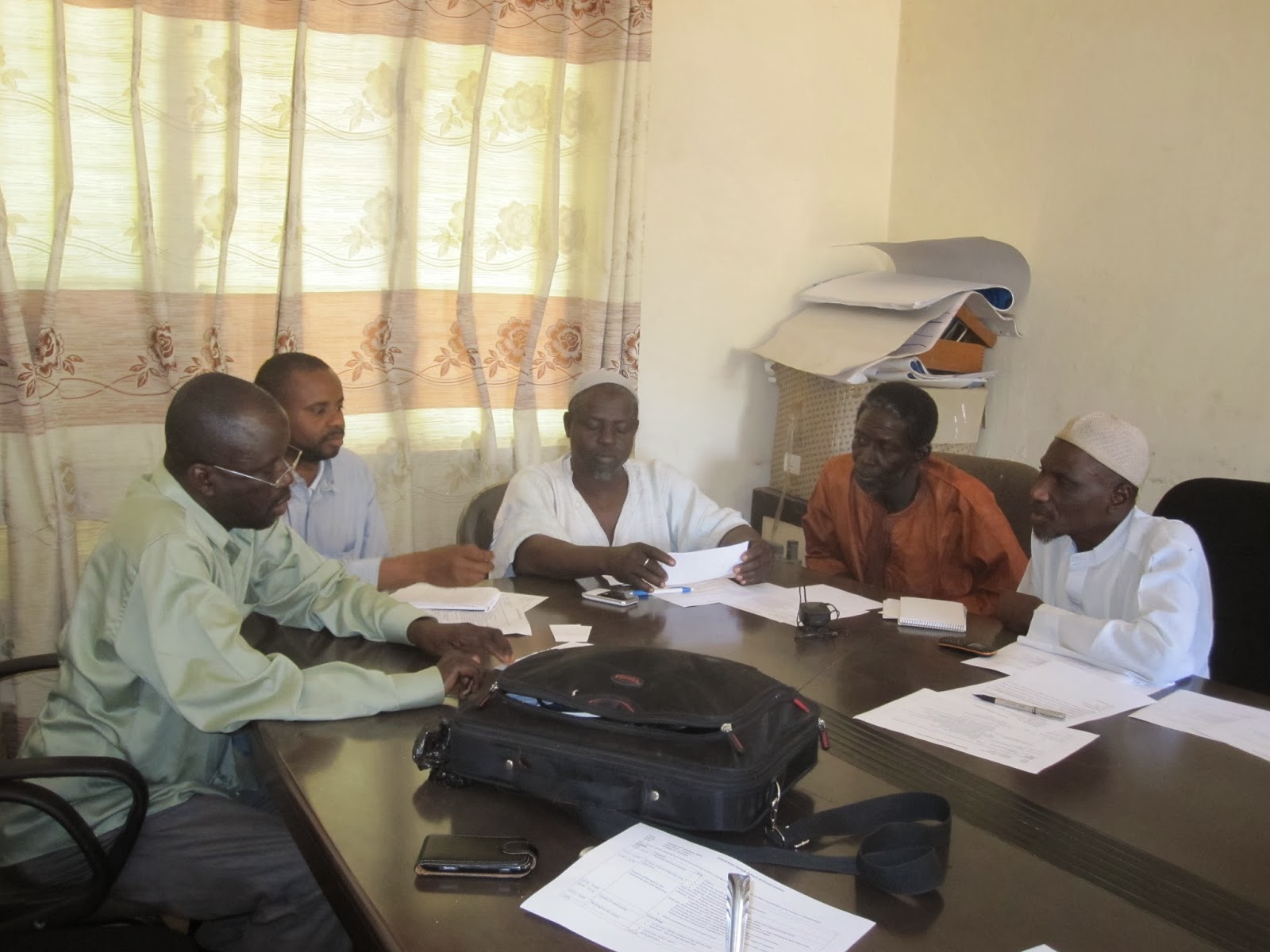
We have been working on the Annual Partnership Reviews since November and I am starting to get very tired of them. If you look at Abdoulie you can see that he is feeling the pain as well. The stress is written all over his face! But with some team work we are getting there, and yesterday all three of us - Abdoulie, Ebou and I - pulled together to get the final one done. 


We went to the Department of Agriculture to see Martin (Munya should also have been there but was away on training). It was an interesting session; if you speak to Martin he feels frustrated that he hasn't been able to do more, and doesn't feel he has achieved as much as he could have done. It is fair to say that, unfortunately, the partners are just realising his potential as he is about to leave, which I think is a challenge for many volunteers. They work so hard to find a way in, break down barriers, reduce suspicion that they are there to take over everyone else's job or mess things up, while learning the culture and dynamics of the organisation, and just as they get it sorted it's time to leave. However, to hear the partners speak you realise that his work has had an impact, and even if it is just that catalyst for further work, and perhaps another VSO placement, he has achieved something and he will leave results behind. As an agricultural specialist I don't think he expected to leave a database as his legacy, but he has built one that will be expanded upon and tied into more central Monitoring and Evaluation Systems. And he will leave behind a manual on crop husbandry, pests and diseases, and best agricultural practice (complete with colour pictures) which will be used by farmers and extension workers, and used to train others in the future.  


The session was quite a long one, and ended up with one of the longest 'closing ceremonies' one of my workshops has ever seen! As Martin goes in a few weeks everyone had a few words to say, and thanks to give, and 5/10/15 minute speeches were given, and then further recapped and summarised by the chair after each one had finished! But it's probably fitting that our final APR had such a formal end. 

This year we conducted 22 sessions and I facilitated and co-facilitated 18 of them. Last year I did 25/25 - co-facilitating the later ones with Ebou who gained more confidence as the process went on. This year Ebou co-facilitated many of the sessions with me right from the beginning, and even facilitated some of them by himself.  

So, now we just need to complete the write ups and meet the deadline... 28 February looms large.  

Creepy crawlies

The first specimen is an impressive praying mantis. I always love seeing these things as they look so unusual. 

A stowaway

He looked like a folded leaf

The second example of creepy crawlies is a more disgusting tale. The other day I went to soak some beans for dinner the next day. Now, I'm used to picking the odd weevil or two out of my beans or rice, washing everything thoroughly and well... just getting on with cooking them really. But this bag of beans was like no other. When I put it down on the counter it was almost moving along! I realised that there had been a weevil party going on, a weevil explosion, and my beans had boosted the weevil population considerably. I don't know how long I had been storing them for but they were now inedible (note to self, eat beans when you buy them). Unfortunately I had opened the bag so I had to find a way to dispose of them. I had no choice but to soak the beans, kill the evil weevils and then throw the beans away. 

In the photo the small things (many many dark dots) are weevils. This is not an appetising photo. Needless to say, I did not eat beans for dinner the next day. 


Monday, 10 February 2014

Monitoring visit

The week after the APR trek #3 I went back up country, all the way to Basse again. This time it was for a monitoring visit, escorting the directors of the Growth and Competitiveness Project so that they could check to see if progress is taking place in the way that we have been documenting in our reports. The GCP is my main project, and separate from the Annual Partnership Reviews, but we managed to combine the monitoring visit with an APR in the interest of saving time and money. I have been extremely busy over the last few weeks! 

We travelled on Tuesday afternoon and called in at Brikama to see Abdoulie's wife. After a few mouthfuls of churra gerte with sour milk (a kind of peanut rice pudding, which we had with a kind of yoghurt on top) we were on our way. We stopped in Soma and bought some meat and bread (which was really delicious) and got up to Basse at about 8 or 9pm. After a quick meeting with the GCP folk we went to bed, and woke up bright and early for our first day of monitoring. 

We called in at a roadside cafe and had a breakfast of fried luncheon, salad, cold chips and bread (just what an English girl wants at 8am!) and then crossed the river over to the WASDA compound. 


Carefully balanced motorbikes


WASDA meeting


After a meeting there we moved about 25km up the road, further into the north bank, and visited the second groundnut growers association that WASDA have set up as part of this project. The meeting was all in Mandinka and Fula, and although I tried to follow as best I could, most of it was lost on me. Of course, a meeting isn't a meeting without a bit of singing and dancing, and before the end the women were playing drums, and attendees were singing and dancing in the centre of the room! 


Wuli Groundnut Growers Association


Impromptu singing and dancing
My 'what on earth is going on' face
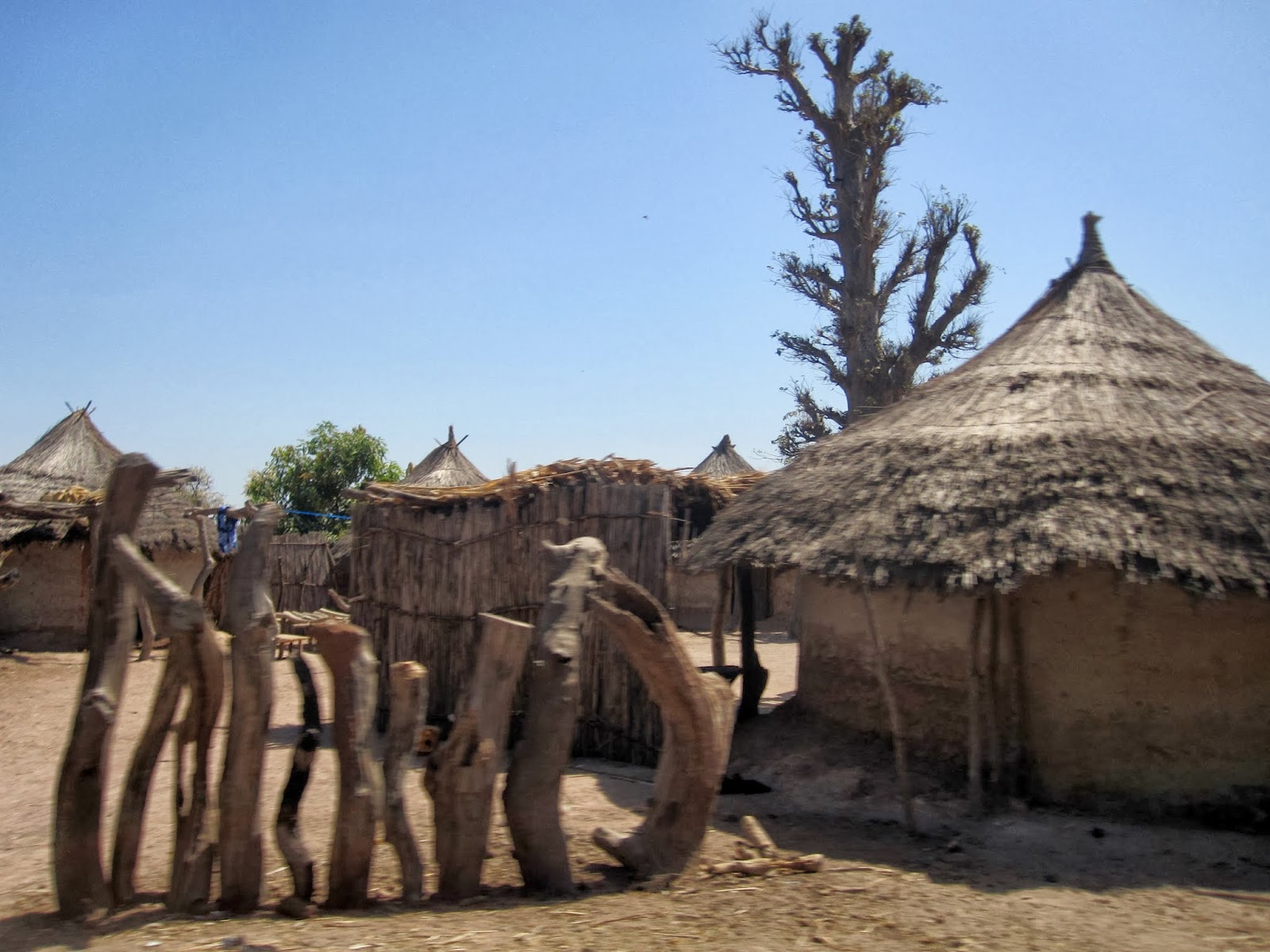
Once finished, we jumped back in the car (around 1.30pm) to drive to Kaur where our next meeting was scheduled. We were driving the north bank road - a place I had never been, and a place it seems not many people ever go. It is really in the middle of nowhere and the road is unmade, a dust bowl of dry arid land, with a few villages scattered here and there. The isolation must be incredible... we bumped down the road for 2.5 hrs (94km!) and the only traffic we saw coming in the other direction was one car, one bus, one lorry and one motorbike. The children, who normally shout 'toubab' as soon as they see me could just about manage to stare open mouthed in surprise, and I came to realise they were as much startled by the pickup truck as they were by the toubab. It was sooooo quiet! And the poverty very stark. It must be an incredibly hard life in that part of the country. 


Our road... for 94km. And this was a smooth part. 

Project director gives out some 'minty'

And soon draws a crowd

Needless to say, after 2.5hrs of bumping down a dirt track we were pretty hot and dusty by the time we reached Kaur (late as the drive had been longer than anyone anticipated). But we held a short meeting with the project group (in Wolof and Mandinka) and then pushed on to Farafenni to spend the night. 


Meeting under the mango tree

AVISU - Agency for Village Support 
We reached there around 7pm and went for dinner at around 8pm, at this point having eaten nothing since the spam and bread in the morning, and my meat and bread at lunch time the day before. We found a roadside food vendor and bought... some meat and bread. 
Our guest house in Farafenni. Looks lovely but I suspect
this is where I was bitten.
The next morning we travelled to Njawara and had out third partner meeting at the Njawara Agricultural Training Centre. This meeting was in Wolof, so while not being exactly fluent I at least managed to get more of the gist than the Mandinka meetings. Although my Mandinka greetings are getting better as a result of my up-country ventures!


Once done at NATC (this time the meeting ended with a nice stroll around the gardens rather than singing and dancing) Abdoulie and I left Ba Sarjo to sleep at Njawara while we bundled off to sleep at his village. I have been there before, for lunch, but it was nice to spend a bit more time there and relax. I was treated to a delicious domoda, we greeted a few people and made some house calls, Abdoulie and I did some work and then I had an early night, fully exhausted and devoid of all language skills, barely managing to mumble my greetings in any language by this point.  

In the morning we were up early to drive back to Kerewan to do an APR with the Kerewan Area Council (after more churra gerte with sour milk). We had tried to organise a 9.30 start but of course the meeting started around 11.30, after breakfast and greetings and me having a little chat with someone in French (too many languages!). The APR went well, but throughout the session I realised I was coming out in more and more raised bumpy welts. I knew that the mosquitoes had been virtually non existent, but I had slept for three nights in a row without a bed net so I thought that something must have got me...

We finished at about 4.30pm and started the long drive home, calling in at different villages to greet people and drop people off along the way. By the time I reached my house it was 10.30pm and I was feeling itchy and irritable... only to discover the next morning that the bites were bed bug bites, and I was covered in head to toe. Literally. Down my earlobes, the ends of my toes, all over my hands, back, arms, legs - everywhere. A delightful end to what was actually quite an interesting, if not exhausting trip! 

I rested over the weekend and then on the Monday we had the final monitoring meeting at NAWFA here in the Kombos. The results of the visit will tie in with a mid-term review that we are currently writing, which should help us make sure that the programme is on track. 


NaWFA - National Women's Farming Association

The obligatory group photo!

Thursday, 23 January 2014

APR trek #3

On Sunday I travelled up country with Abdoulie, Helen, Jane, and our driver Ba Sarjo. Helen joined us as she wanted to interview women and community members - looking at the value of development work - and wanted to listen in on some APRs to pick out stories and case studies about the impact of VSO.  Jane is a VSO volunteer based in Basse. She jumped at the opportunity of a comfortable ride up country and the chance to avoid public transport.

We set off from Kombos at around 1pm and drove to Sukuta to pick up Abdoulie. Abdoulie’s suitcase came out, and we were told he was ‘just coming’. 30 minutes later we called him to find out what was taking so long, only discover he was at his Brikama house – and we were only there to pick his suitcase! The helpful informant at his compound has been misinformed. So we stepped on the gas and headed to Brikama, ate some benechin at his compound and then finally began our journey for real! Armed with staples such as oranges (bargain from the side of the road – 4 oranges for 5dalasi – usually 1 orange for 5 dalasi in the Kombos!) biscuits and water we motored up the country, calling at a few places en route to deliver or buy firewood, charcoal, supplies from Kombos to family members etc – a usual activity which is repeated on the return journey (cheaper upcountry prices taken advantage of).

We finally reached our accommodation around 9pm and had a quick meal of chicken and chips before retiring for the night. 

Up early the next morning, Adboulie, Helen and I crossed the river in a small boat to get to the WASDA compound. WASDA are one of the partners that I work with on the World Bank / Growth and Competitiveness Agricultural project and although I have met with them many times and worked with them, I had not yet been to their office and compound. It was a lovely agricultural training centre and we were shown around before breakfast.


Small boat across the river, as people washed and prepared
for the day ahead
WASDA comppound
Animal area where animal keeping and husbandry is taught
Mango tree saplings for the agro-forestry course
'Living hedge' saplings
Helen learning about 'heap compost'
And a pit for 'pit compost'

Moringa tree orchard - the leaves and fruits are said
to have great health benefits and are powdered
and added to food, tea and soap
After breakfast of some sweet tea (which I usually have to find a way to give to someone else or discretely pour back into the bucket) and smoked fish and onion baguette, Helen went off to interview some women and I started the Annual Partnership Review workshop. The day went well, with good attendance and participation and we heard some great stories of progress.

My best friend the flip chart


Wrapping up at around 4 we left Basse (crossing the river on the ferry this time, rather than a small boat) and headed to Bansang.

We stayed in Bintou’s Paradise lodge – a familiar place to me as I have stayed there a number of nights now, and I was greeted warmly by the owners and one of their daughters who I shared my book with last time I went. After a relaxing drink by the river we went out for afra and bread, and had a quick chat with Anita Smith – a lady who has been visiting Bansang hospital for 22 years now and has raised significant funds to systematically renovate the hospital… improving the horrific conditions she found on her first visit all those years ago. Helen arranged to do a tour of the hospital with her in the morning, and we all headed off to bed.

The next morning we travelled to the hospital, and as promised Helen met Anita to see the facilities. I started the workshop, which was a slow burner to begin with as the volunteer had already returned to her home country; this often makes the sessions a little bit harder to run. But after a quiet start and some breakfast of omelette, bread and salad (and thankfully tea that I could have black) the group got going and the day went ok.

Leaving Bansang we travelled to Kuntaur and checked in at Kairoh Gardens hotel – a much smarter facility than I was expecting in an otherwise very tired looking village. Helen and I were faced with a difficult choice of taking a room each for 350 dalasi and using outside toilets and showers or taking a room that we could share for 450 dalasi with an attached bathroom (and compost toilet). We figured this was the best deal, until we heard that it was 450 per head not per room… which was a very high price for the accommodation. However, we decided that night time forays to the outside toilet were the least favourable option, so we plumped for the shared room. On later hearing hippos roaring across the river, and staff talking about sighting a snake we decided we had made the best decision!

As we were close by to the Wassu stone circles it felt like a good opportunity for Helen to visit, so we jumped back in the car with Ba Sarjo and went to visit Gambia’s version of Stone Henge.  After a near miss with an old man who fell off his donkey cart alarmingly close to the wheels of our pick-up (heart in mouth moment) we bumped down the road to Wassu and looked around, musically accompanied by a young boy playing the balophone. 


Helen 'laterite' Longworth
Ba Sarjo chilling


On our return we took a walk around the village, trailed by children, and saw groundnuts being loaded into the wharf storage. We saw the Christian side of the village, complete with pig rearing facilities, and the Muslim side of the village, and enjoyed hearing about village life as seen through the eyes of our 20 year old self-appointed tour guide.


We headed back to the accommodation for a cup of Yorkshire tea (!) which Helen had packed with her, complete with milk (which was such a treat) and read, listened to hippos and watched fireflies dancing over the river.


Dinner was provided by Kuntaur Area Council, a delicious bowl of goat stew with bread which Helen, Abdoulie, Ba Sarjo and I shared outside, sitting next to the river.

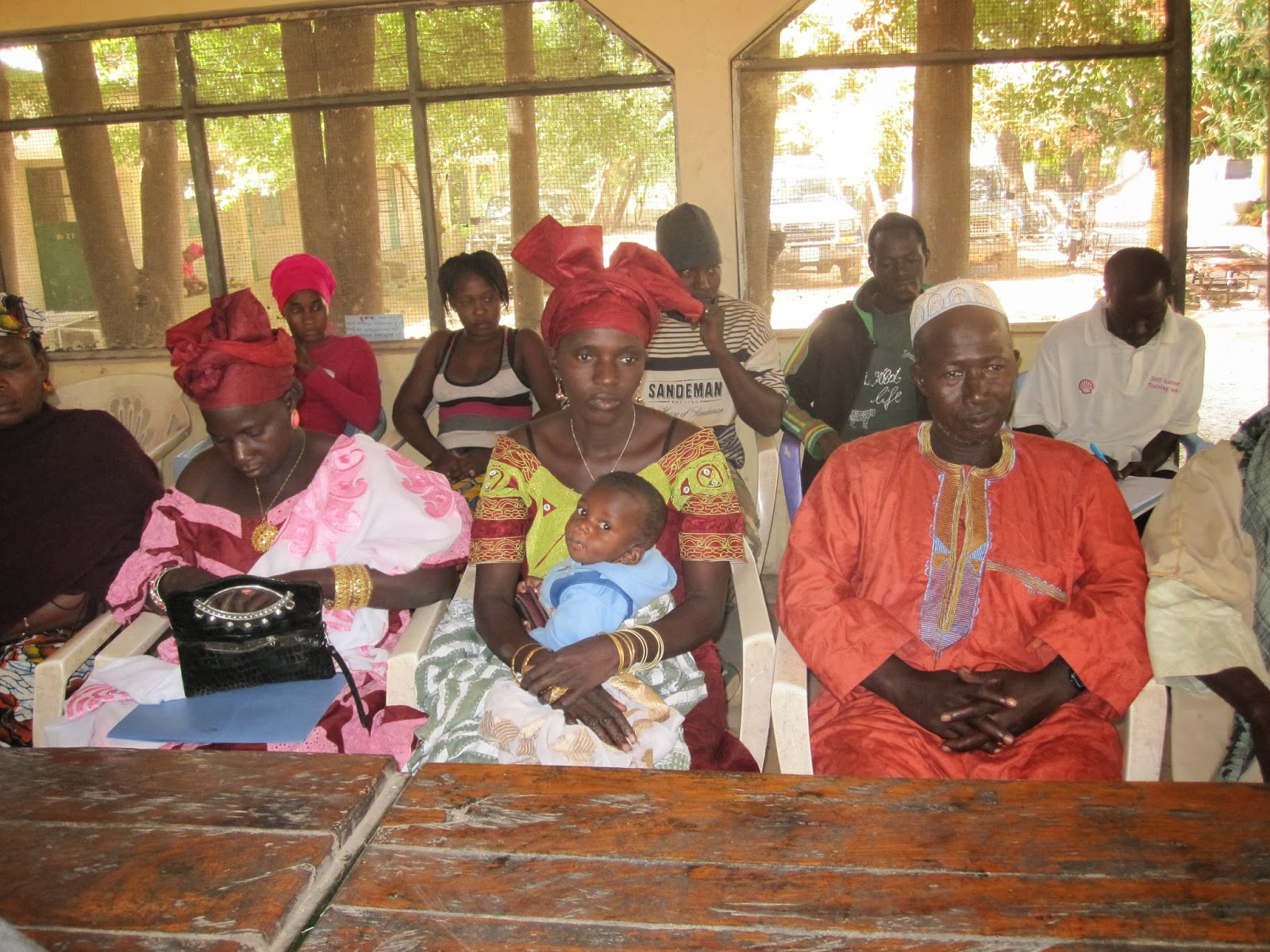
The session with Kuntaur Area Council was a nice one. The project is new, so although the APR wasn’t able to focus on changes seen we identified all the changes that the group wanted to see, and the aspirations for the year ahead. We started late – around 11:30 – as many had travelled long distances to be there, and the session couldn’t begin until everyone had had a breakfast of sardine and onion sandwiches and tea (tea which had so much sugar in it I actually thought it was liquid honey mixed with milk – my cup went to Abdoulie and Helen’s went out of the window while no one was looking!). We managed to finish at around 2:30/3, had benechin for lunch and then headed home – a 5 hour drive back to the Kombos which got us home at around 9:30pm.